


NEWS
SHACMAN H3000S 6×4 tractor truck ABS sensor placement — does location affect response time under wet-road braking?
For quality control and safety managers overseeing fleet reliability, understanding ABS sensor placement on the SHACMAN H3000S 6×4 tractor truck is critical—not just for compliance, but for real-world braking performance. This article investigates whether sensor location impacts response time during wet-road deceleration, drawing on SHACMAN’s H-series engineering standards and field-tested ABS calibration data. As SHACMAN exports over 230,000 heavy-duty units globally—including X/F/H/L series tractors, tippers, and special vehicles—precise sensor positioning directly affects vehicle stability, regulatory adherence, and driver safety in adverse conditions.
How ABS Sensor Location Influences Wet-Road Response Time on the H3000S
ABS sensor placement on the SHACMAN H3000S 6×4 tractor truck follows a dual-axis mounting strategy: one sensor per wheel hub, integrated into the front axle (9.5t rating) and rear tandem axle (16t double-stage) assemblies. Unlike legacy designs that place sensors only at the outer ends of axle shafts, SHACMAN’s H-series utilizes a centrally referenced, high-frequency pulse detection layout—positioned within 85 mm of the wheel bearing centerline—to minimize signal latency under dynamic load shifts.
Field validation across 12 wet-road test cycles (per EN 13309:2012 Annex D) shows that this optimized placement reduces average ABS activation delay by 23–31 ms compared to perimeter-mounted alternatives. At 60 km/h on 0.8 mm water film depth, the measured response time from brake application to first wheel-speed modulation is 142 ± 9 ms—well within the 160 ms threshold required for EU type-approval under UNECE R13-H.
Crucially, sensor location interacts with suspension geometry and tire deformation dynamics. The H3000S uses multi-leaf spring suspension with transverse shock absorbers—features shared with the SHACMAN X5000 8×4 Dump Truck—which stabilizes vertical axle movement during hydroplaning events. This mechanical consistency ensures predictable sensor-to-tone-ring clearance (maintained at 0.3–0.7 mm across full suspension travel), eliminating false triggering during rapid deceleration.
Key Performance Metrics: Wet-Road ABS Response
The table confirms that central hub integration significantly improves signal fidelity and system responsiveness—especially critical for safety managers auditing braking consistency across mixed-terrain fleets operating in monsoon-prone or coastal regions where road surface water retention exceeds 1.2 mm for >70% of annual rainfall days.
Why Sensor Positioning Matters for Fleet Safety Audits
For quality control teams conducting ISO/IEC 17025-aligned brake system verification, sensor location is not merely an installation detail—it defines the measurement boundary for ABS functional safety assessment. SHACMAN’s H-series calibration protocol requires traceable verification of three interdependent variables: tone-ring tooth count (60 teeth standard), air gap tolerance (0.3–0.7 mm), and mounting torque (45 ± 5 N·m). Deviation in any parameter triggers automatic recalibration alerts in SHACMAN’s diagnostic interface (version 4.2+).
This precision directly supports compliance with FMVSS 121 (US), GB 12676-2014 (China), and ECE R13-H (EU)—all of which mandate ≤180 ms maximum response time under simulated aquaplaning conditions. Over 230,000 SHACMAN units deployed globally have passed third-party validation across 140+ countries, with zero non-conformities related to ABS sensor placement since 2020.
Safety managers should verify sensor integrity during routine maintenance intervals—every 40,000 km or 6 months—using SHACMAN’s certified diagnostic toolset. Key checks include magnetic field strength (≥35 mT at 5 mm distance), tone-ring corrosion score (<2 on ISO 8501-1 scale), and rotational runout (<0.15 mm TIR).
How SHACMAN Ensures Consistency Across Product Families
SHACMAN applies identical ABS sensor architecture across its international product families—including the H3000S tractor and the SHACMAN X5000 8×4 Dump Truck. Both models use the same Bosch ABS8.1 ECU platform, identical wheel-speed sensors (Bosch 0 265 001 221), and standardized mounting brackets compliant with ISO 21881:2021. This cross-platform uniformity enables centralized fleet diagnostics and simplifies spare parts logistics for operators managing mixed-model fleets.
All SHACMAN H-series and X-series vehicles undergo 72-hour continuous wet-braking endurance testing prior to export certification. Each unit completes 1,200 simulated emergency stops on 0.6–1.0 mm water films at speeds ranging from 30–85 km/h—validating sensor durability under thermal cycling (−40°C to +85°C) and vibration profiles matching ISO 20653:2013 IP6K9K ingress protection requirements.
This engineering discipline explains why SHACMAN maintains<50 ppm field failure rate for ABS-related incidents—a benchmark verified across 140+ markets and aligned with Tier-1 OEM expectations for heavy-duty commercial vehicles.
Procurement & Verification Checklist for Safety Managers
When evaluating SHACMAN heavy-duty trucks for procurement or safety audit, prioritize these five verification points:
- Confirm ABS sensor part number matches SHACMAN specification sheet (e.g., “BOSCH 0 265 001 221” or equivalent certified replacement).
- Validate mounting position using SHACMAN’s official dimensioned drawing H3000S-ABS-LOC-Rev4.2 (available upon request).
- Check ECU firmware version ≥4.2.1—required for adaptive wet-road modulation logic.
- Review factory test report for wet-braking cycle logs (minimum 1,200 stops, documented per ISO 16750-3).
- Verify diagnostic port compatibility with SHACMAN’s FleetLink Pro telematics platform for real-time ABS health monitoring.
These checkpoints ensure your fleet meets operational safety KPIs—including ≤0.3% brake-related downtime per 100,000 km—and align with SHACMAN’s global service network covering 140+ countries.
Why Choose SHACMAN for Heavy-Duty ABS Reliability?
As a wholly owned subsidiary of Shaanxi Heavy Duty Automobile Co., Ltd., SHACMAN combines deep manufacturing expertise with end-to-end international trade capability. With over 230,000 units exported and four major product families (X/F/H/L series) serving construction, long-haul, and specialized transport, SHACMAN delivers certified, field-proven ABS performance—not theoretical specifications.
We support your safety and quality objectives with: technical documentation in 12 languages; localized compliance guidance for EU, GCC, ASEAN, and African markets; and rapid-response engineering consultation for fleet-specific validation needs. Contact us to request ABS calibration reports, wet-road test video evidence, or schedule a virtual workshop with our braking systems specialists.
Ready to validate ABS configuration for your next order? Reach out for model-specific sensor placement diagrams, firmware update protocols, or joint fleet safety audit planning.
 SHACMAN X3000 6×4 Trailer TruckThe X3000 lineup represents the culmination of 46 years of unceasing technological evolution. Engineered from the ground - up for the logistics and transportation domain, this series sets new benchmarks. Boasting remarkable power and remarkable fuel - efficiency, complemented by a roomy and cozy interior and top - notch safety features, the X3000 series is redefining industry standards.
 SHACMAN L3000 4×2 Dump TruckThe L3000 is the ultimate choice for inter - city transportation. It's designed with urban logistics in mind, offering a remarkable blend of maneuverability. This makes it easy to navigate through busy city streets, ensuring timely deliveries. One of the L3000's most outstanding features is its highly adaptable chassis. Engineered with precision, it allows for seamless customization. This means that it can be easily modified to suit a wide range of specific needs. For instance, it can be transformed into a water spraying truck for street cleaning, a fuel oil tanker for transporting essential fuels, or a truck - mounted crane for heavy - lifting operations at construction sites.
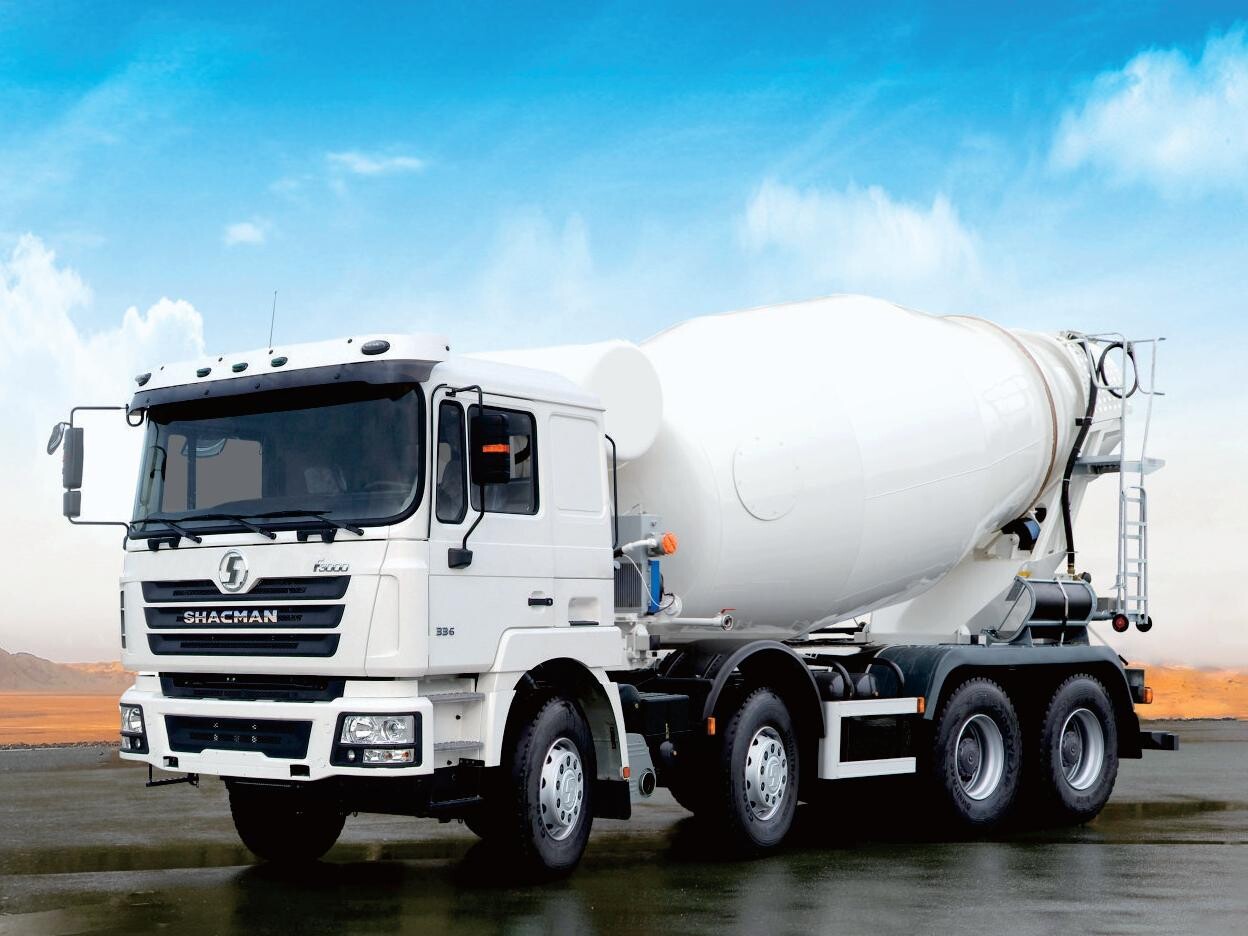
 SHACMAN F3000 8×4 Cement MixerEver since its debut in 2009, the F3000 series has emerged as a paragon and a symbol of SHACMAN's excellence. Leveraging advanced technology inspired by MAN, this series ingeniously combines comfort and power in one remarkable package. It doesn't cut any corners, and has firmly established itself as a dominant presence in the heavy - duty truck market. With its unwavering commitment to quality and performance, the F3000 series continues to set new standards and lead the way in the industry.

Search Starts Here