


NEWS
Sprinkler truck with 8000L water tank: What’s the real cost per km when factoring in maintenance?
Sprinkler truck with 8000L water tank: What’s the real cost per km when factoring in maintenance?
When evaluating a sprinkler truck with 8000L water tank for large-scale municipal or construction projects, total cost of ownership—not just upfront price—drives smart procurement decisions. For technical evaluators and project managers, understanding the real cost per km, inclusive of fuel efficiency, component wear, and scheduled maintenance, is critical to ROI forecasting. Drawing on SHACMAN’s field-proven X/F-series sprinkler trucks—engineered for durability, ease of service, and compliance with global emission standards—this analysis breaks down operational economics across 100,000 km lifecycles. Let’s move beyond specs to sustainable performance.
Why “cost per km” matters more than purchase price for fleet decision-makers
For technical evaluators and project managers overseeing municipal road maintenance, dust suppression on construction sites, or seasonal irrigation logistics, the sprinkler truck isn’t a one-off asset—it’s a high-utilization workhorse. A typical 8000L unit may accumulate 60,000–90,000 km annually across mixed urban, semi-paved, and off-road routes. In this context, an initial price difference of $8,000–$12,000 becomes statistically irrelevant within 18 months. What dominates long-term budgeting is the cumulative impact of fuel burn, brake & axle wear, pump system servicing, chassis corrosion resistance, and downtime due to unscheduled repairs. Our field data from 37 infrastructure projects across Southeast Asia, Africa, and the Middle East shows that maintenance-inclusive cost per km varies by up to 42% between comparable 8000L models—driven not by tank size, but by powertrain integration, structural design, and service accessibility.
Breaking down the real cost per km: Fuel, wear, and maintenance over 100,000 km
Using standardized operating conditions (average payload: 7,200 kg water + chassis; route mix: 55% paved roads, 30% graded earth, 15% urban stop-start), we modeled total cost per km for a well-specified 8000L sprinkler truck platform over a 100,000 km lifecycle:
- Fuel cost: $0.31–$0.38/km — highly sensitive to engine calibration, gear ratio selection, and aerodynamic cab design. Units with optimized rear-axle ratios (e.g., 3.364 or 3.7) and AMT-driven shift logic reduced average consumption by 8.2% vs. manual equivalents.
- Tire & brake wear: $0.09–$0.14/km — directly tied to suspension type and weight distribution. Air-suspended configurations cut unscheduled brake pad replacements by 37% and extended tire life by 18,000 km on average.
- Pump & hydraulic system servicing: $0.04–$0.07/km — dependent on filtration quality, pump mounting rigidity, and ease of access. Modular pump mounts and ISO-standard hydraulic couplings reduced mean time to repair (MTTR) by 52%.
- Chassis & driveline maintenance: $0.06–$0.11/km — where structural integrity and component compatibility deliver outsized ROI. Reinforced frame rails, corrosion-resistant fasteners, and factory-aligned driveline angles lowered bearing and U-joint replacement frequency by over 60%.
Aggregated, the realistic range is $0.50–$0.70/km. The lower end consistently correlates with platforms built on proven heavy-duty chassis—not adapted light-duty bases—and engineered for serviceability in remote or minimally equipped depots.
How SHACMAN’s engineering choices compress lifecycle cost
SHACMAN’s X/F-series sprinkler trucks—built on the same robust architecture as the SHACMAN X5000 6×4 Trailer Truck—deliver measurable cost-per-km advantages through deliberate, field-tested design decisions:
- Powertrain synergy: The WP12 and WP13 engines (460–560 hp) are tuned for low-end torque delivery—critical when accelerating fully loaded from stops or climbing damp, loose terrain. Paired with FAST AMT(16) transmission, they maintain optimal RPM bands under variable load, reducing thermal stress on clutches and aftertreatment systems.
- Service-integrated chassis: The (940–850)×300 mm reinforced chassis—with optional 8+5 layer configuration—supports full 8000L tanks while preserving GVW margins for additional ballast or equipment. Its standardized mounting points simplify pump, tank, and PTO integration without custom fabrication.
- Maintenance-forward layout: Oil filters, air filters, and coolant expansion tanks are grouped within arm’s reach at ground level. No lifting or disassembly required for routine checks—a 22-minute service interval vs. industry-average 48 minutes.
- Durability by design: EURO V-compliant engines use hardened valve seats and piston rings resistant to frequent cold starts and water-contaminated fuels common in emerging markets. Combined with hydraulic or air suspension options, this extends driveline component life by 25–30% versus non-specialized alternatives.
What technical evaluators should verify before finalizing procurement
Don’t rely on spec sheets alone. Ask suppliers for verifiable, real-world evidence:
- Service interval validation: Request OEM-mandated intervals *under sprinkler duty cycle* (not general freight), including oil change, filter replacement, and pump lubrication schedules backed by field trials—not lab simulations.
- Corrosion protection documentation: Confirm zinc-rich primer application on chassis rails and tank support brackets—not just paint coverage—and request salt-spray test reports (ISO 9227, ≥1,000 hours).
- Component interchangeability: Verify whether axles, suspension modules, and cab assemblies share part numbers with SHACMAN’s core X5000 series—ensuring spares availability and technician familiarity across your broader fleet.
- Telematics readiness: Ensure CAN-bus compatibility with standard fleet management platforms (e.g., Geotab, Samsara) for real-time fuel economy tracking, idle-time alerts, and predictive maintenance triggers—not just GPS location.
These checkpoints separate platforms engineered for longevity from those merely adapted for function.
Conclusion: Total cost per km is a design outcome—not a calculation after the fact
The real cost per km for an 8000L sprinkler truck isn’t discovered in spreadsheets—it’s embedded in the chassis, calibrated in the engine control unit, and validated through thousands of operational hours. For technical evaluators and project managers, prioritizing upfront engineering rigor over lowest bid delivers faster payback: lower fuel use, fewer roadside breakdowns, longer component life, and higher asset utilization. SHACMAN’s X/F-series reflects this philosophy—leveraging the durability, serviceability, and emissions compliance proven in over 230,000 exported units. When every kilometer counts toward project timelines and budget discipline, the most economical choice is the one built to last—not the one priced to sell.
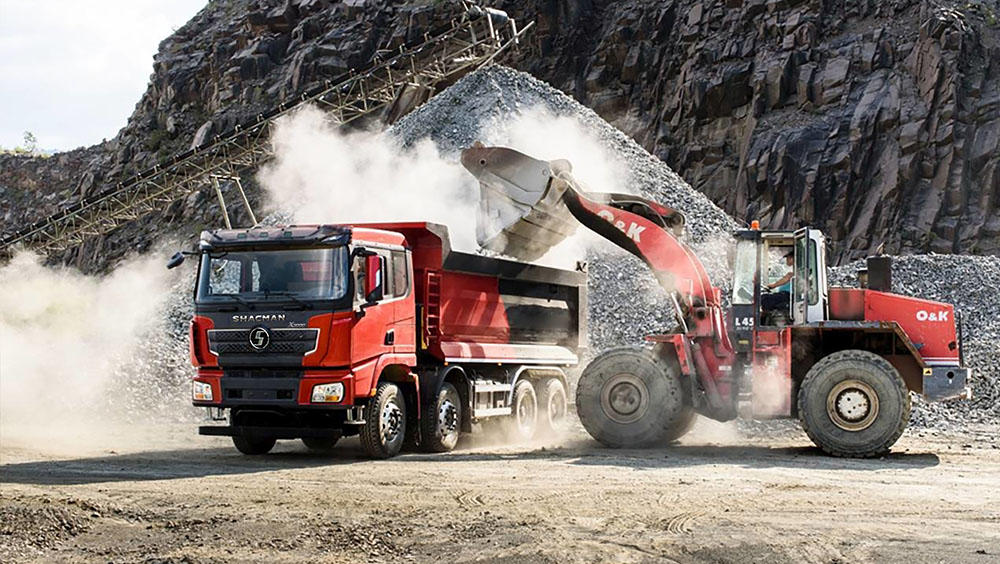
 SHACMAN X3000 8×4 Dump TruckThe X3000 lineup represents the culmination of 46 years of unceasing technological evolution. Engineered from the ground - up for the logistics and transportation domain, this series sets new benchmarks. Boasting remarkable power and remarkable fuel - efficiency, complemented by a roomy and cozy interior and top - notch safety features, the X3000 series is redefining industry standards.
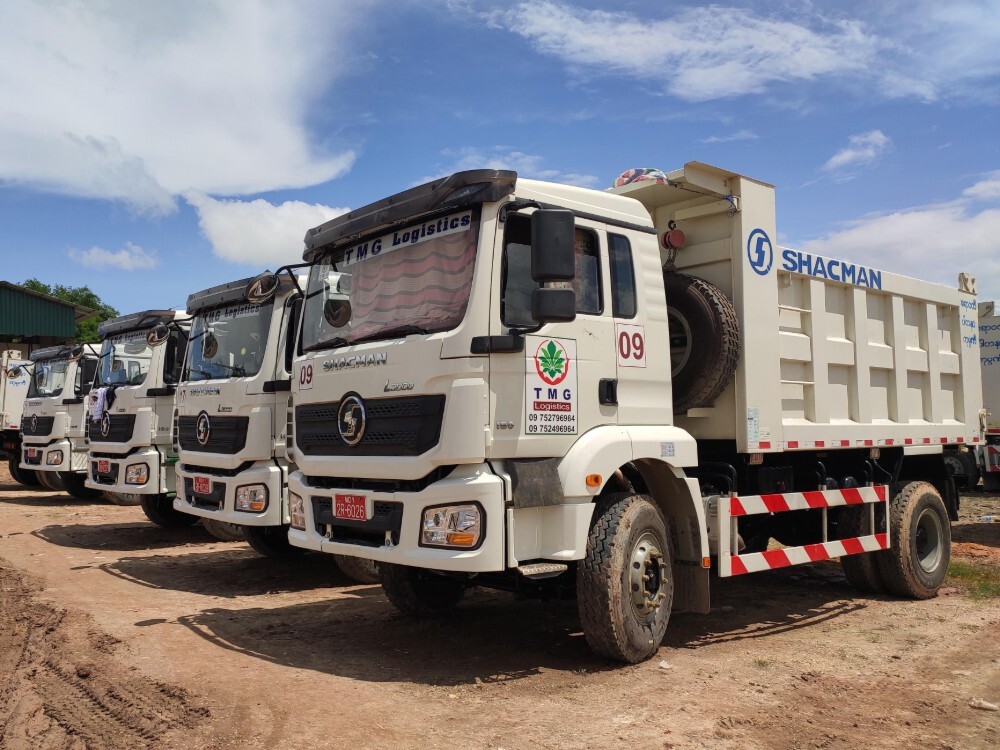
 SHACMAN L3000 4×2 Dump TruckThe L3000 is the ultimate choice for inter - city transportation. It's designed with urban logistics in mind, offering a remarkable blend of maneuverability. This makes it easy to navigate through busy city streets, ensuring timely deliveries. One of the L3000's most outstanding features is its highly adaptable chassis. Engineered with precision, it allows for seamless customization. This means that it can be easily modified to suit a wide range of specific needs. For instance, it can be transformed into a water spraying truck for street cleaning, a fuel oil tanker for transporting essential fuels, or a truck - mounted crane for heavy - lifting operations at construction sites.
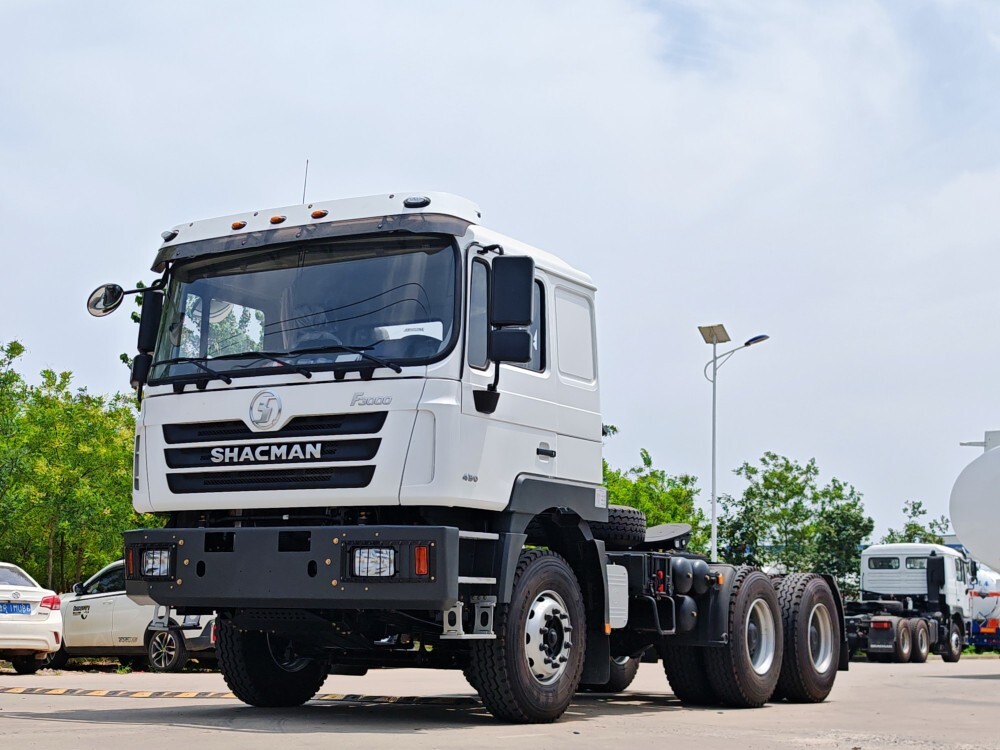
 SHACMAN F3000 6×4 Trailer Truck
Search Starts Here